
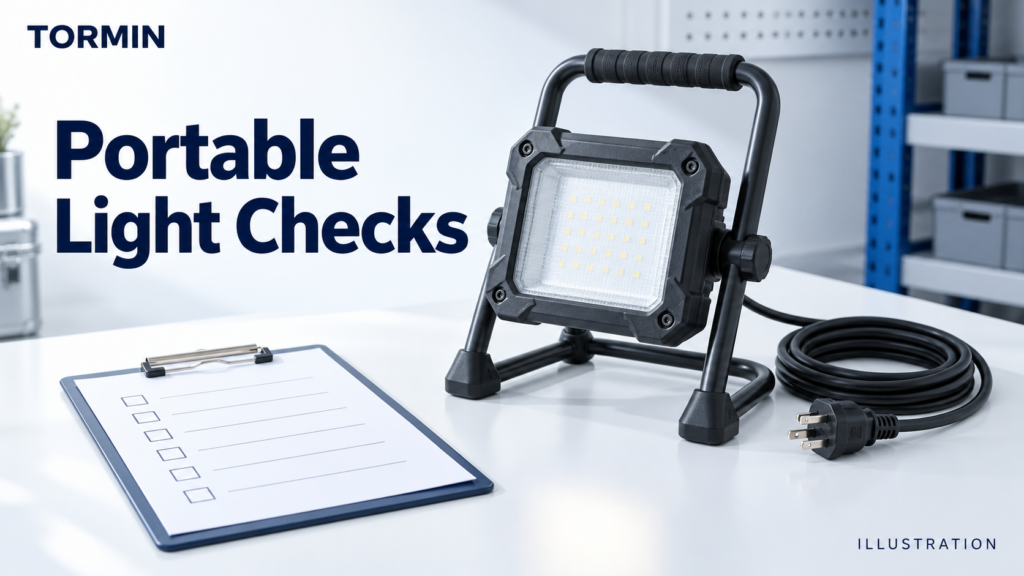
Example article for layout testing. The cover is an AI-generated illustration. This is not a repair procedure.
Check a portable work light only after it is switched off and disconnected from the supply, in a safe location. Follow its instructions. If equipment appears unsafe, prevent further use and refer it to a competent person.
A short external check
| Look at | Reason to stop and report |
|---|---|
| Cord and cable entry | Cuts, exposed inner wires, unsuitable taped repairs or a loose entry |
| Plug and housing | Cracks, broken parts or signs of overheating |
| Lens and support | Damage or instability that could create a hazard |
Know the limits of a visual check
Looking at the outside does not prove electrical safety. Do not open the light, repair the cord or perform live measurements as part of this checklist. Internal examination, repair and testing require appropriate competence and procedures.
Record the asset or model number and the observed defect. Keep suspect equipment out of service until it has been assessed. A formal inspection schedule should follow the risk assessment, environment and manufacturer guidance rather than a universal interval from a short article.
For hazardous areas, equipment selection and inspection need additional controls. Do not take a generic work light into such an area or disconnect equipment there based on this article. Ask the responsible site specialist or request model-specific guidance.
Reference: HSE: Work using electrically powered equipment.