
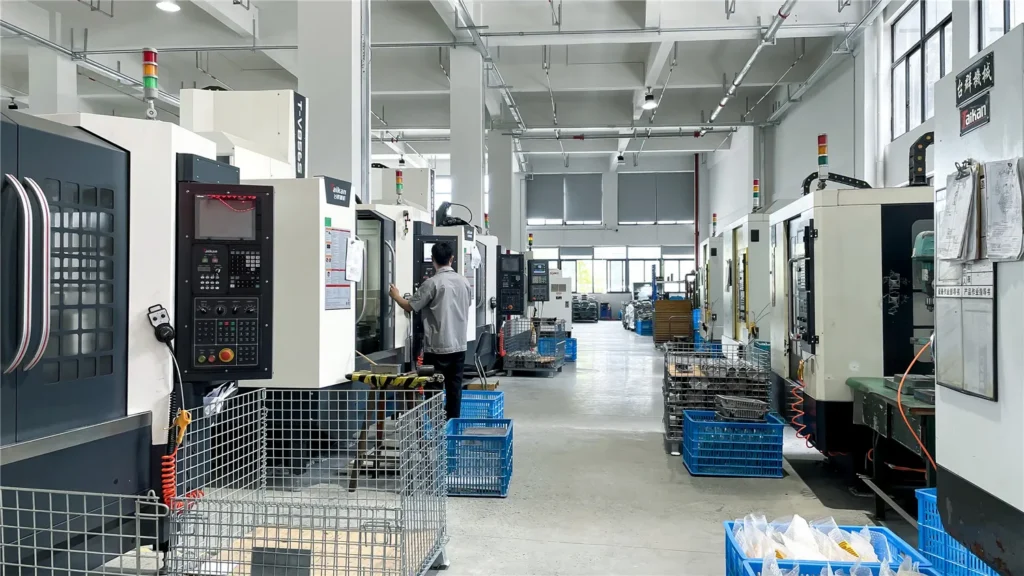

Example article for layout testing. The cover is an AI-generated illustration, not a product specification.
Select a high-bay light distribution using mounting height, the area to be lit and the proposed fixture spacing. A beam-angle label alone cannot establish whether a layout provides suitable illumination.
Start with the space, not the angle
| Input | Why it matters | Provide |
|---|---|---|
| Height above the task plane | Changes the light footprint | Mounting and working-plane heights |
| Racks and working areas | Change where light is needed and obstructed | A dimensioned floor plan |
| Candidate luminaire | Its actual distribution controls the result | The exact model’s photometric file |
A footprint is not an illuminance calculation
For an ideal symmetric cone, footprint diameter is 2 × height × tan(half the beam angle). At a hypothetical height of 6 metres and angle of 60 degrees, that diameter is approximately 6.9 metres. This is geometry only: the edge is not a guaranteed light level, and real optics need not behave like an ideal cone.
A lighting calculation should account for the actual intensity distribution, surfaces, obstructions and project criteria. Compare coverage, uniformity and glare as well as power input. Do not choose spacing from the footprint calculation alone.
Use the lighting enquiry checklist to prepare the information for a supplier or lighting designer.
Reference: DOE commercial and industrial LED luminaire guidance.